My Dog Won't Eat: What to Check Today, How Long to Wait and What to Do
If your dog won't eat, check three things before anything else: how long it has been since he last ate, what other signs show up with it, and who this dog is. A healthy adult who skipped dinner and is still lively can be watched for a few hours. A puppy, a diabetic dog, a dog with a chronic illness, or any dog that won't eat and also vomits, seems weak or has a swollen belly goes to the vet today.
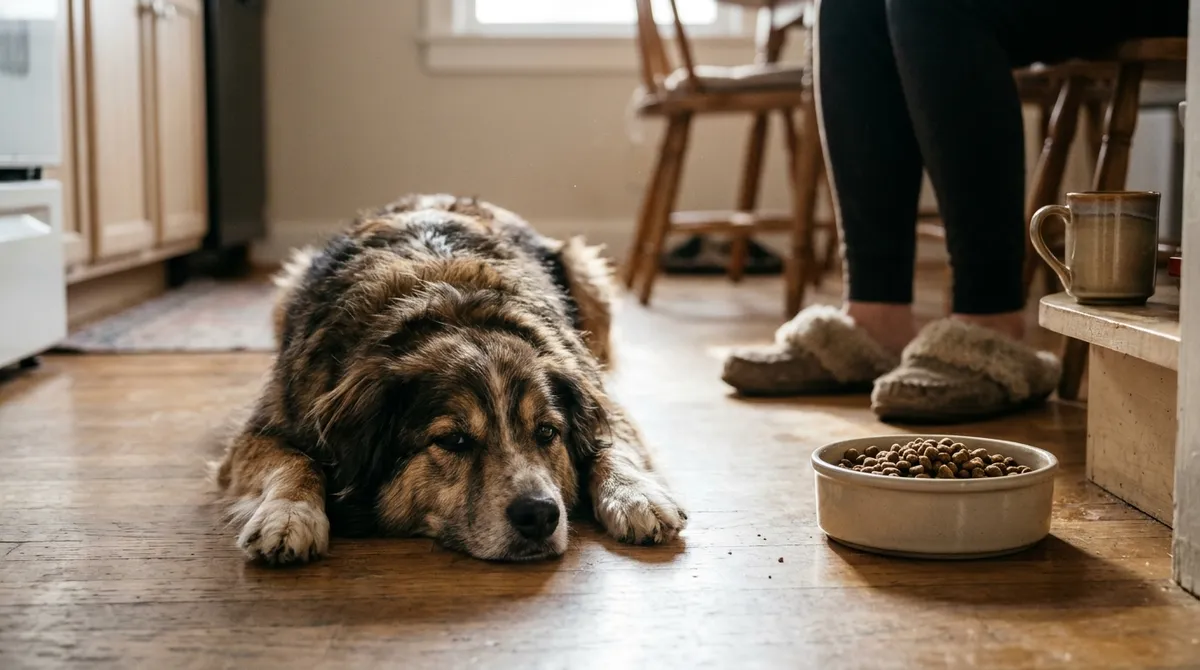
It's morning. The bowl is as full as you left it last night, and the dog who always waited by the kitchen door didn't even get up. You shake the bag of food, the sound that used to bring him running. He opens one eye, wags his tail a little and stays where he is.
Take a breath. Most of the time, a dog that skips a meal has a simple reason. Sometimes, though, loss of appetite is the first warning that something is wrong, before vomiting or weight loss. Start by noting on your phone the time of the last meal he ate properly: that clock will decide almost everything from here on.
Is he refusing everything or just his food?
Offer a small piece of something he loves, just as a test. Three different dogs can leave the same bowl full.
He wants nothing. He sniffs, turns away, refuses even the piece of chicken he would snatch from your hand on a normal day. This is true loss of appetite, the kind that deserves the most attention.
He wants to, but can't. He walks up to the bowl excited, picks up the kibble and drops it. He chews on one side only, lets food fall out, paws at his muzzle, has bad breath he didn't have before. This dog is hungry, and something is getting in the way: mouth pain, a broken tooth, something stuck. Changing the food won't fix it; someone needs to take a look.
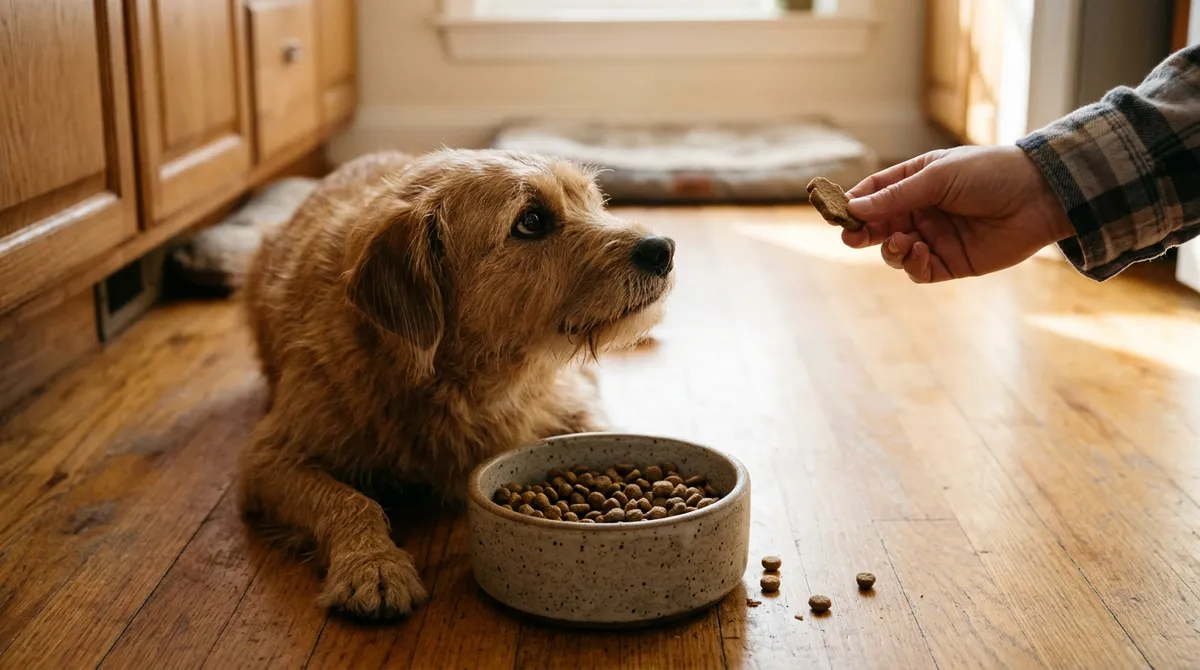
He refuses his food but accepts everything else. He ignores the bowl, but shows up in two seconds when grandma slips bread under the table thinking nobody sees. This is picky eating, almost always the result of too many treats.
But this third situation has a catch. A dog that has always eaten well and, from one week to the next, only accepts food with something tasty on top may be sick. In a sick dog, it's common for appetite to drop or become unstable rather than disappear entirely. Old pickiness is a habit; a new change in a dog who was never fussy deserves the same care as a real refusal.
When it's urgent: see the vet today
There's no clock here. If your dog won't eat and also:
- vomits several times or tries to vomit with nothing coming up;
- has a swollen, hard belly or cries out when you touch it;
- has severe diarrhea, especially with blood;
- is weak, faints, can't stand up or gets more listless by the hour;
- has pale gums or trouble breathing;
- may have eaten something toxic or swallowed an object (sock, toy, bone, corn cob, stone);
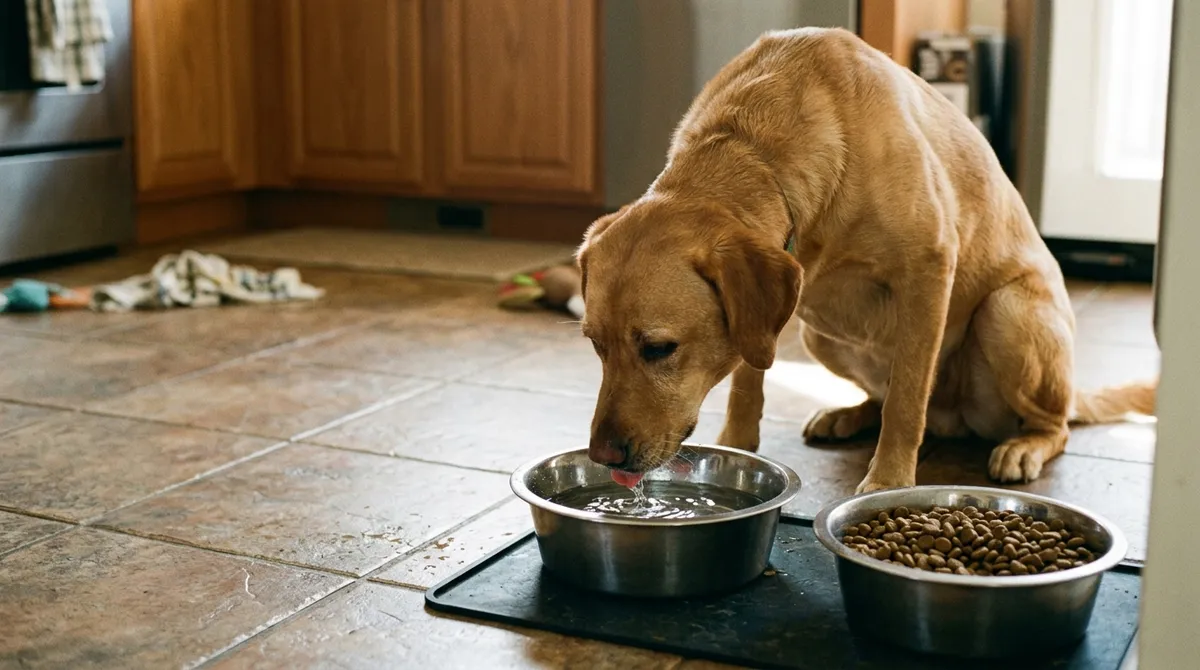
- is drinking much more water than normal;
then the time is now. A swallowed object can block the intestine and often ends in surgery: if you saw the sock disappear, don't wait for any sign. And loss of appetite along with excessive thirst can be an emergency, for example in a dog with uncontrolled diabetes.
Diabetic dogs, by the way, have their own rule. VCA, a US network of veterinary hospitals, recommends urgent care when a diabetic dog refuses even a single meal, because skipping food interferes with the insulin injection and its effect. Puppies don't go in the waiting line either (there's a section just for them further down). And if he started a new medication and stopped eating, call whoever prescribed it right away.
Won't eat and is trembling, just lying there, or vomiting and sad
The answer is the same for all three: a dog that won't eat and spends the day lying down, trembling or vomiting is listless, and that means a same-day visit. If vomiting is what worries you most, including that yellow vomit from an empty stomach, also see when vomiting needs a vet.
And if your dog already has a diagnosed tick-borne disease or distemper and stopped eating, the path is to go back to the vet who follows the case, the same day, with no home remedy in between.
How long can a dog go without eating?
You'll find everything online: 12 hours, 24, 48, "a few days". We chose the more cautious side, because erring on that side costs only a phone call. Here is the path:
- A healthy adult skipped a meal and is acting normal (plays, drinks water as usual, pees and poops as usual): watch closely and offer the next meal at the usual time.
- Close to 12 hours without eating: call the vet and share what you noted. The conversation alone helps decide whether you can wait or should go in.
- More than 24 hours without eating: see the vet, even if he looks fine and keeps drinking water.
- Any sign from the urgent list appeared: forget the clock and go.
- Puppy, miniature breed, diabetic, or dog with a chronic illness (heart, kidneys, cancer): these don't follow this count. If a meal was refused, talk to the vet soon.
Puppies and very small dogs have little energy reserve and can develop low blood sugar quickly: in a dog weighing four pounds, a few hours weigh a lot.
"He won't eat, he only drinks water, so he's fine"
It's the most common thought, and it holds nothing up. Drinking water only means he hasn't lost his thirst; a dog that drinks but doesn't eat can be sick all the same. And if he drinks much more than normal, the water becomes a warning sign and the call to the vet is today.
Why your dog won't eat
With urgency ruled out, it's time to play detective and go over your dog's last week.
The food itself. Smell the bag and check the expiration date. Old kibble goes rancid, and a giant bag opened months ago for a small dog is a strong suspect. Sometimes the maker changes the formula.
Treats and table scraps. The breakfast cookie, the lunch meat, grandma's bread, who "only gives a little piece" and usually gives several. He gets to mealtime without hunger, or waiting for something better. Ask around the house who has been giving what.
Stomach and intestines. The most common cause. Raided trash, something spoiled on the walk, food switched overnight, worms. Nausea doesn't always show up as vomiting: licking his lips a lot, drooling and eating grass count too.
Routine changes and stress. New home, travel, boarding, a baby, another pet, construction, fireworks, even a bowl moved to another corner. When things calm down, most healthy dogs go back to eating on their own.
Heat. On a very hot day, many dogs eat less and return to normal when the temperature drops. Offer the meal during the cooler hours.
Mouth and teeth. A broken tooth, inflamed gums, something stuck. Vets disagree about how much this cause weighs, and for you the dispute doesn't matter: when in doubt, look in his mouth in good light and ask the vet to look too.
Pain elsewhere in the body. A dog with arthritis feels pain just lowering his head to the bowl. With hip dysplasia, even walking to the kitchen can hurt.
A new medication. Antibiotics, anti-inflammatories and chemotherapy are among those that can take away hunger. Tell whoever prescribed it, without stopping the medication on your own.
Illnesses that only tests reveal. Kidneys, liver, pancreas, diabetes, hormonal diseases, infections, tick-borne disease, tumors. None of them can be found at home, and that's why the 24-hour limit exists.
What the vet will do
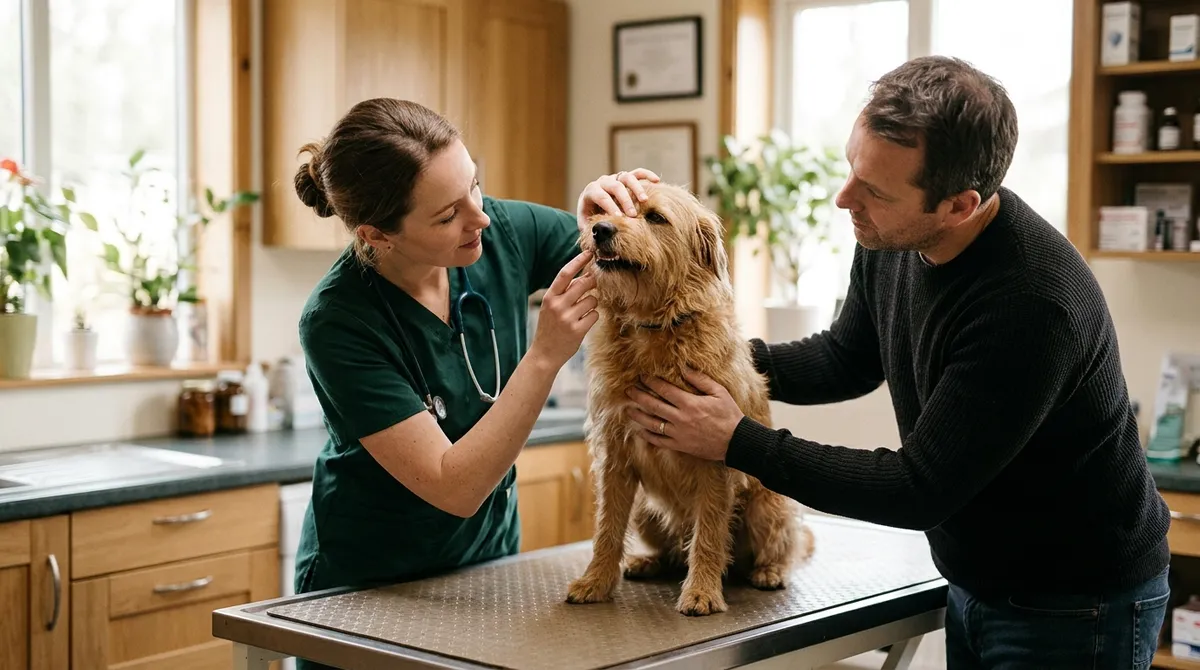
At the visit, those notes become gold: the vet will ask when it started, what he ate, whether he vomited, whether he peed and pooped normally, whether he took any medication. Then the vet examines the whole dog and, depending on the case, orders blood, urine and stool tests, X-rays or an ultrasound. Sometimes the mouth can only be examined properly with the dog sedated.
If needed, the vet prescribes a drug to boost appetite or against nausea. When the dog still isn't eating enough, there is tube feeding or feeding through a vein. Veterinary nutritionists at Tufts University point out that after three days or more of eating too little to maintain weight, it's already time to think about a feeding tube. The feeding guide for hospitalized animals goes in the same direction and also counts the days without eating at home. Every day of waiting counts.
"I don't have the money for the vet right now"
It happens to a lot of people. Here's what you can do until you manage it:
- Call the clinic and describe what you see. Often the conversation alone tells you whether it can wait until tomorrow or you should go now.
- Take notes and film. A short video of him walking up to the bowl and giving up makes the visit much shorter.
- Know the signs that can't wait by heart: the ones on the urgent list. With them, the visit comes before saving money.
What isn't part of the plan, however tight the month is, is medicating on your own to save money. The wrong medication hides the problem, and the bill usually ends up higher later.
The puppy that won't eat
The puppy arrived yesterday, spent the first night crying in the crate and this morning didn't even look at the food. Is it the stress of the move? It could be. But a puppy doesn't wait to see.
He has little energy reserve and can become dehydrated or develop low blood sugar much faster than an adult. If he refused more than one meal, he needs to be examined soon. If, besides not eating, he vomits or has diarrhea, the visit is the same day, because at this age the first suspicion to rule out is parvovirus.
Meanwhile, do your part at home: a quiet corner, fresh water, the same food he ate before he came, a calm routine. To organize the first days, also see how to teach where to pee and poop.
The senior dog that eats less: is it just age?
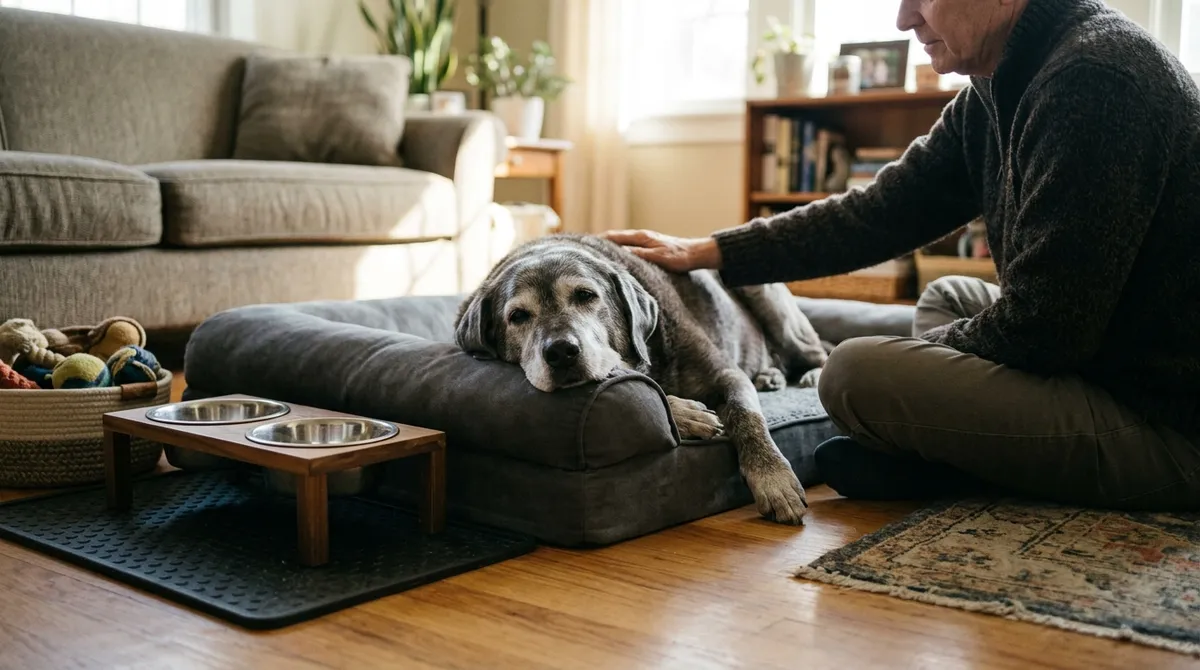
The dog is seventeen, sleeps almost all day and in recent weeks leaves half her food in the bowl. Is it age? Partly. A healthy senior dog burns less energy and may eat a little less. What age doesn't explain is a dog that stops eating, or that has been eating less and less. "It's just age" is the phrase that most delays diagnosis in old dogs, and behind it there may be mouth pain, arthritis or an illness that only tests reveal.
How long can an old dog go without eating? In practice, treat the senior like the chronic patient: don't wait the 24 hours, call the vet the same day, even if she seems merely tired. At home, a raised bowl and kibble softened for weak teeth help.
What to do at home while you watch
An adult with no urgent signs, active and drinking water? While you watch, for a short time:
- Keep taking notes of every meal offered and how much he ate.
- Check the food: expiration date, smell, new batch.
- Offer the usual food at the usual time. Wet food can be warmed slightly, which gives off more smell.
- Don't force it. Shoving food into the mouth of a dog with no hunger only creates a fight and disgust for the bowl.
- Don't turn into a menu. Offering one food after another irritates the stomach and hides the problem.
- Fresh, clean water all the time.
What about the home remedy from that video?
Videos are full of recipes: tea of this, a human pharmacy pill, an over-the-counter vitamin, a syrup that "opens the appetite". Human medicine without a vet's guidance can harm the dog and, even when it doesn't, it masks what is going on. The only home option that makes the cut is simple food, with rules.
Is it okay to offer different food?
It can be, with rules. The safest way is different food for a short time only, only in an adult dog with no other signs, and only with simple things.
- Boiled chicken with rice, no skin, no bones, no seasoning and no fat, as a bridge back to his usual food.
- Broth over the food: two to three tablespoons of homemade chicken broth with little salt. No garlic, no onion, no seasoning at all, because garlic and onion are bad for dogs. Bouillon cubes and the broth from the family pot are out.
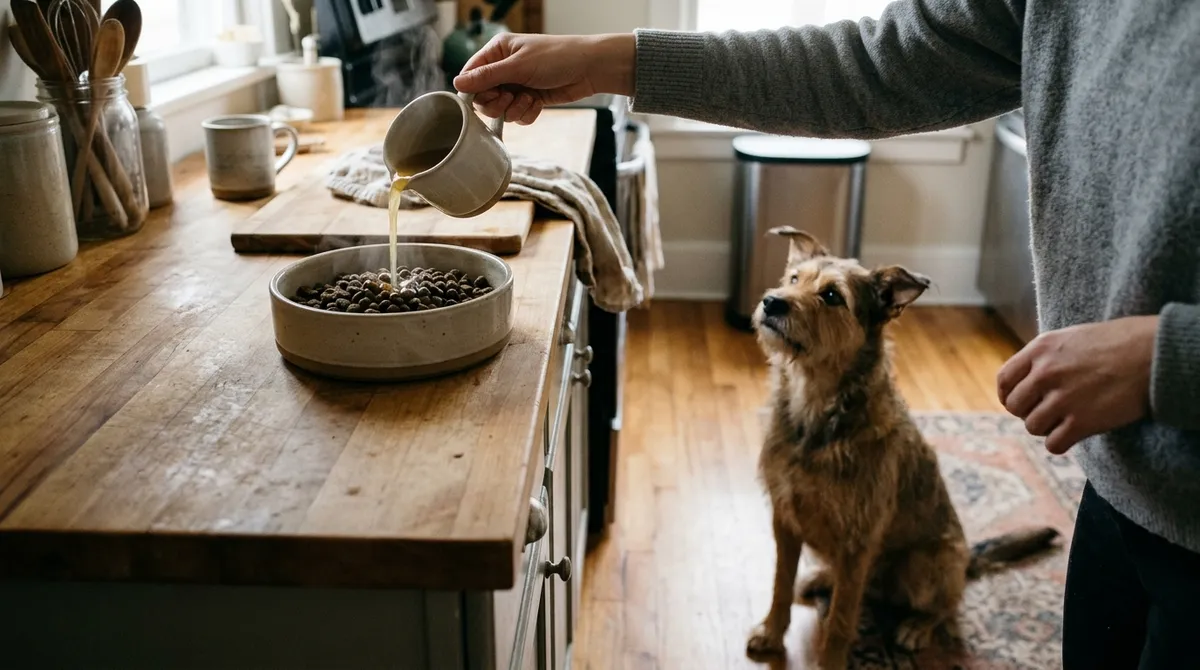
- Kibble warmed or moistened with warm water: the smell rises, and many people see the dog go back to the bowl right away. Warm, not hot.
If he eats the chicken eagerly and refuses the kibble, the hunger is there. If he won't eat even that, the loss of appetite is real and the clock keeps running. A dog with a chronic illness or special diet only changes food with the vet who follows the case.
The tricks from the comments
Hand feeding. Good for a listless, shy or newly arrived dog, and to see whether he wants to but can't. It becomes a trap when a healthy dog discovers that refusing the bowl earns him restaurant service.
Pretending to eat his food. In a healthy, fussy dog it sometimes sparks curiosity. In a dog that isn't well, it changes nothing.
Tricks are for unlocking things and should be phased out gradually. If a dog who always ate on his own now only eats with a show, it's that new picky eating from the start, and it calls for a vet.
How to get your dog to eat his food again
This part applies after the vet has ruled out illness, or for the dog whose problem has always been habit.
- Fixed schedule, bowl with a deadline. Put the bowl down, step away, wait about fifteen minutes. Didn't eat? Pick it up without drama and offer again only at the next meal.
- One person in charge. Grandma will protest; gently take the bread out of her hand and give her the training treat instead.
- Treats under control. Treats, bread and leftovers, added together, shouldn't go over 10% of daily calories. If he refused the meal, no treats until the next one.
- Switch food only gradually, mixing more and more of the new with the old over several days to weeks.
- One trick, not a menu. Warming, moistening, swapping dry for wet: pick one and stick with it.
- Don't give in. If he refuses the kibble and then gets chicken, he learned the wrong lesson.
Pickiness or just his way?
Some dogs are born with little interest in food, and many husky owners know it. Tufts tells the story of a thin poodle uninterested in food who went through a battery of tests, all normal: he was simply like that. If yours has been picky forever, keeps his weight and has energy, he's fine.
The word that separates the cases is "always". What calls for a vet is the change: the dog who stopped eating after giving birth, the glutton who suddenly lost interest, the husky who ate little and now eats nothing.
Only eats when the family is home
Some dogs won't touch the bowl alone, or at someone else's house, and eat as soon as the family arrives. If he eats enough and keeps his weight, this is usually normal: offer meals with someone nearby. Leaving him with someone else? Send his food and schedule in writing, and agree on a deadline to call the vet.
Three dogs and one that always waits
With more than one dog at home, sometimes one waits for the others to finish and ends up eating little. Feed each one in his own corner, with no competition. Often the "poor eater" was just the politest of the bunch.
When to go back to the vet
Even after the visit, go back if the loss of appetite goes past the deadline the vet agreed on with you, if any new sign appears (vomiting, diarrhea, weakness, trembling, listlessness), if he starts drinking much more water, if he starts a new medication and his appetite changes, or if he goes back to eating and keeps losing weight.
Fridge cheat sheet
- Check three things: how long, what other signs, who this dog is. And note the time.
- Repeated vomiting, swollen belly, weakness, pale gums, swallowed object, too much thirst: vet today.
- Diabetic who refused a meal: care right away.
- Puppy not eating: see the vet soon; the same day if he vomits or has diarrhea.
- Healthy adult: skipped a meal, watch; close to 12 hours, call; past 24 hours, see the vet.
- Senior that stops eating: it's not age. Call the same day.
- Never human medicine or a recipe from a video.
- Chicken with rice or broth: no seasoning, no garlic, no onion, for a short time, only in a dog with no other signs.
- Back to his food: fixed schedule, one person in charge, treats up to 10% of calories, don't give in.
A dog that leaves the bowl full is telling you something. Most of the time it's something small. When it isn't, the one who gets there early solves it better, and the sound of the food bag brings him running again.
Sources
This text was written from the sources we consulted in October 2026:
- Urgent Care for Loss of Appetite — VCA Animal Hospitals
- Why Won't My Dog Eat? Causes and When to See a Veterinarian — MedVet
- Dog Not Eating? Causes and When To Call Your Vet — PetMD
- Why Is My Dog Not Eating? Common Causes of Loss of Appetite in Dogs — American Kennel Club
- Drugs That Affect Appetite in Monogastric Animals — Merck Veterinary Manual
- Mi perro no come: Causas, Diagnóstico y Tratamiento — AniCura España
- Assisted Feeding: When to Consider a Feeding Tube — Petfoodology, Tufts University
- Some dogs live to eat… — Petfoodology, Tufts University
- Picky pet prescription: What to do when your pet won't eat her prescribed therapeutic diet — Petfoodology, Tufts University
- Feeding Guide for Hospitalized Dogs and Cats — WSAVA
- Mi perro no quiere comer: ¿qué hacer? — Medivet España