
Dog ate chocolate: what to do, toxicity levels, and when to rush to the vet
Dog ate chocolate? Whether it is an emergency depends on three key factors: the type of chocolate, how much was eaten, and your dog's weight. Call your veterinarian or the nearest 24-hour emergency vet right now, even if your dog is wagging their tail and acting completely normal. Do not try to induce vomiting at home and do not wait for symptoms: dog ate chocolate symptoms often take 6 to 12 hours to show up, and by then, the best window for treatment has passed.
An empty Halloween candy bag on the living room floor, half a chocolate Easter egg missing, or a chocolate chip cookie that was on the coffee table a minute ago. And there your dog sits, looking completely innocent. Take a deep breath. Most dogs recover well, especially when owners act quickly.
Dog ate chocolate: what to do step-by-step
- Remove any leftovers. Pick up remaining pieces and wrappers. If you have multiple dogs, separate them to figure out who ate it.
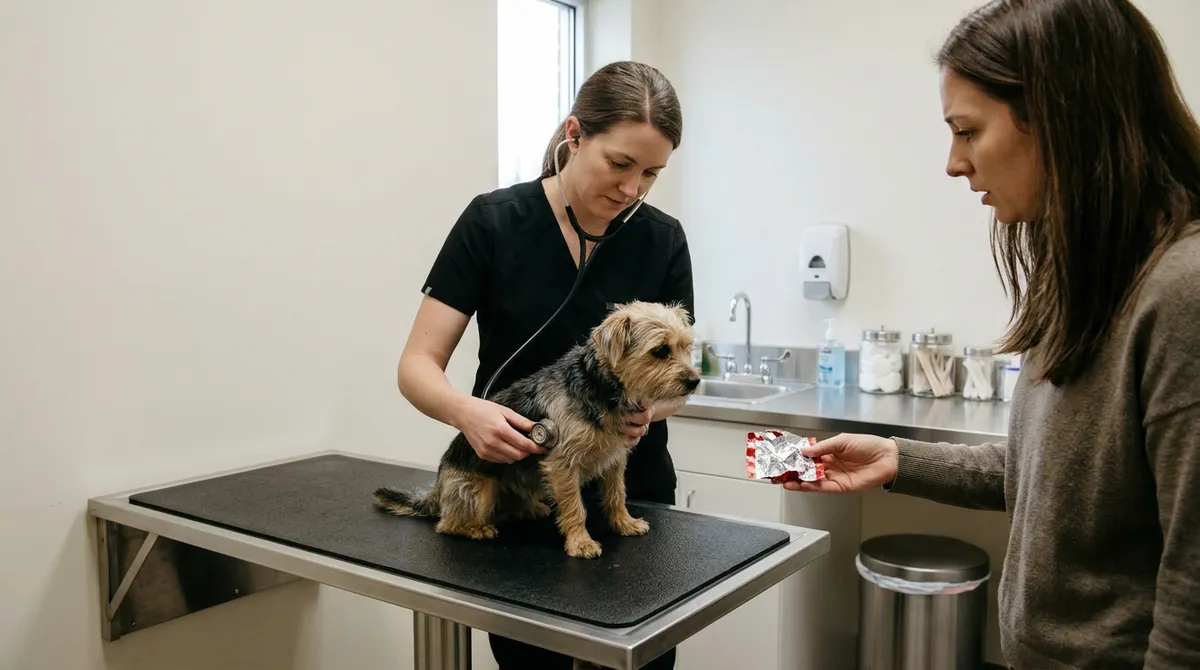
- Save the packaging. It tells you the type of chocolate, brand, net weight, and ingredients. If the wrapper was swallowed too, note that down.
- Estimate how much disappeared. Half of a 3.5 oz (100 g) bar is about 1.75 oz (50 g). If it was a bag of chocolate chips or candies, count the wrappers or estimate what was left. When in doubt, overestimate.
- Note the time. Even an estimate like "around 8:00 PM" helps, as timing changes what the vet can do.
- Know your dog's weight. If you are not sure, weigh yourself on a scale holding your dog, then subtract your own weight.
- Call for help. Call your vet, an emergency vet clinic, or a poison control hotline. Provide the type, brand, amount eaten, estimated time, and your dog's weight, age, and health history. Follow their instructions—they will often ask you to bring your dog in right away.
- Do not wait for symptoms. This is the easiest mistake to make.
In the US, 24-hour pet poison hotlines are available, such as ASPCA Animal Poison Control Center and Pet Poison Helpline (consultation fees may apply). Save your vet's number and a 24-hour emergency clinic number in your phone today before you ever need them.

"My dog seems totally fine, do I really need to call?"
Yes. A dog can play all afternoon and start showing severe distress in the middle of the night. Early treatment is safer, more effective, and usually less expensive than trying to save a dog that is already trembling or in shock. Whether they stole a chocolate brownie from the counter or snatched a chocolate donut from the trash, their body processes the toxin the same way. Sometimes the professional on the line will say you can monitor at home, but let them make that decision.
Can I make my dog vomit at home?
Do not induce vomiting on your own. This is a common question online, often posted by frantic owners holding a bottle asking which concentration to use. Stop right there.
Making a dog vomit at home carries real risks. They can inhale vomit into their lungs, causing severe aspiration pneumonia, or develop ulcers in their esophagus and stomach. Certain breeds and dogs with underlying medical conditions face even higher risks. A dog that is lethargic, having seizures, or struggling to swallow should never be forced to vomit.
What about using hydrogen peroxide if a dog ate chocolate?
3% hydrogen peroxide is sometimes advised by poison control or vets as a last resort, but only for dogs, within a specific timeframe, and under direct professional guidance. The wrong concentration or an expired bottle can worsen the situation. Even 3% hydrogen peroxide causes tissue damage: a study in healthy dogs found stomach lesions in every dog given 3% hydrogen peroxide within 4 hours. Dogs given veterinary emetics had no such lesions. Always let a veterinarian decide if inducing vomiting is safe.
Salt, milk, olive oil, or gagging: avoid these home remedies
The list of home methods that should never be used to induce vomiting is long:
- Salt: can cause fatal salt poisoning, leading to brain swelling, seizures, and coma.
- Olive oil or butter: can trigger acute pancreatitis and aspiration pneumonia.
- Syrup of ipecac: toxic to dogs and can cause severe heart complications.
- Mustard, toast, water, or milk: will not make your dog vomit and wastes critical time.
- Sticking a finger down their throat: can injure their throat, terrify your dog, and lead to a painful bite.
: Should I give activated charcoal at home?
No. Even in veterinary clinics, activated charcoal is administered carefully because it can cause severe dehydration and dangerous hypernatremia (high blood sodium levels). It is reserved for life-threatening toxicities and managed with fluid therapy. Administering charcoal at home without professional supervision can create severe complications.
Why is chocolate toxic to dogs?
Chocolate contains two chemical compounds that dogs process very poorly: theobromina and caffeine. Both are central nervous system stimulants belonging to the methylxanthine family. The main problem is that dogs metabolize them extremely slowly.
According to the Merck Veterinary Manual, it takes a dog's body about 17.5 hours to eliminate just half of the ingested theobromine (and about 4.5 hours for caffeine). Because it lingers in the bloodstream, the toxin accumulates and continuously overstimulates the heart and nervous system. That is why a dog might look fine shortly after eating a chocolate cupcake or chocolate muffin, but develop severe issues hours later. Dog size plays a massive role: a treat size that seems harmless to a human can be a toxic dose for a 10 lb dog.

Chocolate toxicity by type and dog weight
To determine how dangerous the exposure is, veterinarians look at two things: how many milligrams of methylxanthines (theobromine + caffeine) were consumed per pound or kilogram of body weight.
Chocolate types ranked from most to least toxic
Higher cocoa content means higher toxicity. Approximate total methylxanthines per ounce (28g):
- Unsweetened cocoa powder: ~800 mg/oz (28.5 mg/g). The absolute highest risk, often found in baking pantries.
- Unsweetened baker's chocolate: ~450 mg/oz (15.5 mg/g).
- Dark chocolate (60–70% cocoa): ~280 mg/oz (10.1 mg/g).
- Semi-sweet dark chocolate: ~150 mg/oz (5.5 mg/g).
- Milk chocolate: ~64 mg/oz (2.3 mg/g).
- White chocolate: ~1 mg/oz (0.04 mg/g) — negligible theobromine.
Toxicity thresholds in dogs: mild symptoms (vomiting, diarrhea, restlessness) can occur at around 9 mg/lb (20 mg/kg). Heart dysfunction and arrhythmias start around 18–23 mg/lb (40–50 mg/kg). Seizures and severe neurological signs occur at 27 mg/lb (60 mg/kg) and above. Individual sensitivity varies, so some dogs show clinical signs at lower levels.
Calculating your dog's risk
The basic math:
- Ounces eaten × mg of toxin per ounce = Total toxin ingested.
- Total toxin ingested ÷ Dog's weight in lbs = Dose in mg/lb.
Scenario 1: A 10 lb dog ate a single milk chocolate candy (about 1 oz). That equals ~64 mg of toxin, or 6.4 mg/lb. While below the threshold for severe toxicity, milk chocolate contains fats and sugars that can cause stomach upset or pancreatitis. A vet call is still recommended.
Scenario 2: A 22 lb dog ate half a 3.5 oz bar of 65% dark chocolate (1.75 oz). That equals 1.75 × 280 mg = 490 mg total, or ~22 mg/lb. This puts the dog in the cardiac risk zone. Immediate emergency care is required.
Quick reference for a 20 lb dog: mild toxicity signs can appear with just 0.25 oz of cocoa powder, 0.5 oz of baker's chocolate, 1.2 oz of dark chocolate, or 3 oz of milk chocolate. For a 10 lb dog, cut those amounts in half.
These calculations help assess urgency, but they do not replace veterinary advice. Ingredients, fillings, and individual dog health alter the outcome.

"Isn't milk chocolate harmless?"
Milk chocolate contains less cocoa than dark or baker's chocolate, so it takes a larger quantity to cause severe methylxanthine poisoning. However, "less dangerous" is not safe. In small dogs, even a few pieces of milk chocolate or a single chocolate glazed donut can cause distress, and high fat content can trigger acute pancreatitis.
What if a dog ate white chocolate?
White chocolate contains minimal theobromine, so classic chocolate toxicity is unlikely. However, it is loaded with fat and sugar, which can trigger severe vomiting, diarrhea, and pancreatitis. Furthermore, some white chocolate products contain xylitol, a sweetener extremely toxic to dogs. Always check the label and contact your vet.
Dog ate chocolate symptoms and timeline
Symptoms usually appear within 6 to 12 hours after ingestion, but can take longer. A dog that snatches a chocolate chip cookie at 8 PM might look fine at bedtime and become critically ill overnight.
Early signs of chocolate poisoning:
- Excessive thirst and increased panting;
- Vomiting;
- Diarrhea;
- Abdominal bloating or tenderness;
- Restlessness or pacing.
As toxicity progresses, signs include severe hyperactivity, excessive urination, loss of coordination (drunken gait), muscle tremors, seizures, abnormally fast or irregular heart rate, fever, and collapse.
How long do symptoms last? In moderate to severe cases, effects can persist for up to 72 hours. Pancreatitis from fat ingestion can develop 24 to 72 hours later.
Prompt treatment prevents fatalities, but severe poisoning can be fatal, usually due to heart arrhythmias, extreme hyperthermia, or respiratory failure. Puppies, senior dogs, and pets with pre-existing heart conditions are at highest risk.
When to go straight to an emergency vet clinic
Go to an emergency veterinary clinic immediately (call en route) if your dog shows repeated vomiting, severe agitation, rapid breathing, racing heartbeat, muscle tremors, loss of balance, or seizures. Emergency care is also vital if the chocolate contained raisins, macadamia nuts, or xylitol.
If your dog ingested cocoa powder, dark chocolate, or baker's chocolate, call immediately—because toxic thresholds are reached with tiny quantities, immediate clinic decontamination is usually recommended.
What if my dog ate chocolate and hasn't acted sick?
If it has only been 1 to 3 hours, symptoms simply have not had time to manifest, and cardiac issues like arrhythmias cannot be seen from the outside. According to the Pet Poison Helpline, seeking prompt guidance is always safer than waiting.
If you discovered wrappers the next day and your dog is eating, drinking, and acting completely normal, the acute stage of theobromine toxicity may have passed. However, monitor them for the next few days. High-fat treats can cause delayed pancreatitis. Symptoms like vomiting, abdominal pain, or a dog losing appetite warrant a vet visit.
"My large dog once ate a chocolate bar and was fine." That can happen if a large dog eats milk chocolate. But if a small dog eats dark chocolate, that same amount could be fatal.
Dog ate chocolate and is throwing up: what now?
Spontaneous vomiting does not mean all the toxin is gone. Some chocolate may already have entered the small intestine, and vomiting itself is often an early clinical symptom of toxicity rather than effective self-cleaning. Call your vet, report that your dog ate chocolate and is throwing up, and mention how many times it happened. If you are dealing with a dog that won't stop vomiting, seek immediate emergency care.

Hidden dangers combined with chocolate
Chocolate is frequently baked into cakes, cookies, and holiday sweets containing other toxic ingredients:
- Raisins and grapes: found in fruitcakes or chocolate-covered snacks; even small amounts cause acute kidney failure.
- Macadamia nuts: cause severe weakness, hyperthermia, vomiting, and tremors.
- Xylitol (birch sugar): common in sugar-free baked goods and candies. It causes rapid, life-threatening drops in blood sugar and liver necrosis. Review the ASPCA guide to human foods to avoid for complete details.
- Foil and plastic wrappers: can cause intestinal blockages or lacerations, particularly in small dogs, which may require surgery.
- High fat content: rich treats like truffles and brownies can trigger painful acute pancreatitis 1 to 4 days later.
How veterinarians treat chocolate toxicity
There is no direct antidote for theobromine toxicity, so veterinary treatment focuses on decontamination and supportive care.
Decontamination: If ingested within 1–2 hours and asymptomatic, the vet will safely induce vomiting using medical-grade emetics. If too much time has passed or vomiting is unsafe, gastric lavage may be performed.
Supportive care: IV fluids flush toxins through the kidneys and prevent dehydration. Medications are given to control heart rate, blood pressure, muscle tremors, and seizures. Severe cases require hospitalization for continuous heart monitoring. Always bring the original packaging to the clinic.
"A small bite won't hurt": debunking the myth
Even a small piece can cause illness depending on the dog's weight and the type of chocolate. One square of milk chocolate eaten by a 70 lb Labrador is very different from that same square of dark chocolate swallowed by a 5 lb Chihuahua. Never assume a small piece is safe—let a veterinarian perform the safety calculation.
Can dogs ever eat chocolate?
No. Dogs should never be given real chocolate in any amount. Anecdotes about dogs eating chocolate without issue are simply cases of luck regarding dose and body weight.
Dog-safe "chocolate" treats sold at pet stores are made from carob, a plant ingredient safe for dogs. Carob mimics chocolate's flavor without theobromine or caffeine. Always verify on the label that it contains zero cocoa or real chocolate.
What if a cat ate chocolate?
Cats are equally sensitive to theobromine and caffeine. However, because cats lack sweet taste receptors, chocolate ingestion is less common. If your cat eats chocolate, contact a vet immediately. Note: hydrogen peroxide should never be given to cats to induce vomiting at home, as it causes severe hemorrhagic gastritis.
How to prevent chocolate poisoning in the future
- Store sweets high up: keep chocolate in upper cabinets, never on coffee tables, low counters, or nightstands.
- Halloween candy safety: place trick-or-treat bags high on top of the refrigerator or inside closed pantries immediately.
- Holidays: Easter baskets, Christmas stocking stuffers, and Valentine's Day boxes are primary causes of accidental exposure. Stay vigilant.
- Houseguests: remind visitors to keep purses, backpacks, and coat pockets zipped and off the floor. Open bags with chocolate bars are a major risk.
- Educate children: teach kids why sharing chocolate snacks with pets is dangerous.

Quick emergency summary
- Dog ate chocolate: call your vet, emergency clinic, or pet poison hotline immediately.
- Have ready: packaging, estimated amount eaten, time elapsed, and your dog's weight.
- Dark = dangerous: cocoa powder, baker's, and dark chocolate carry high toxicity risks.
- Do not induce vomiting at home without explicit instructions from a professional. Never use salt, oil, or gagging.
- Activated charcoal: leave this decision to veterinary staff.
- Symptoms: usually appear within 6 to 12 hours. Do not wait for them.
- If they threw up naturally: call the vet anyway.
- Extra hazards: watch for raisins, macadamia nuts, xylitol, and swallowed wrappers.
- Cats: call the vet right away; never give hydrogen peroxide to a cat.
Save emergency vet and poison hotline numbers in your phone today.
Sources
This article was written using references and guidelines from veterinary organizations updated as of October 2026:
- Chocolate Toxicosis in Animals — Merck Veterinary Manual
- Toxicosis por chocolate en animales — MSD Veterinary Manual
- Chocolate Toxicity — Pet Poison Helpline
- My Dog Ate Chocolate: What To Do (Even If They Seem Fine) — Pet Poison Helpline
- Should I Make My Pet Vomit at Home? — Pet Poison Helpline
- What to Do If Your Pet Gets into Chocolate — ASPCA
- Is It Ever Safe to Induce Vomiting? — ASPCA
- People Foods to Avoid Feeding Your Pets — ASPCA Animal Poison Control
- Chocolate Poisoning in Dogs — VCA Animal Hospitals
- Chocolate Poisoning in Cats — VCA Animal Hospitals
- Chocolate para cachorro — Hospital Veterinário Ufape
- Effects of oral 3% hydrogen peroxide used as an emetic on the gastroduodenal mucosa of healthy dogs — Journal of Veterinary Emergency and Critical Care