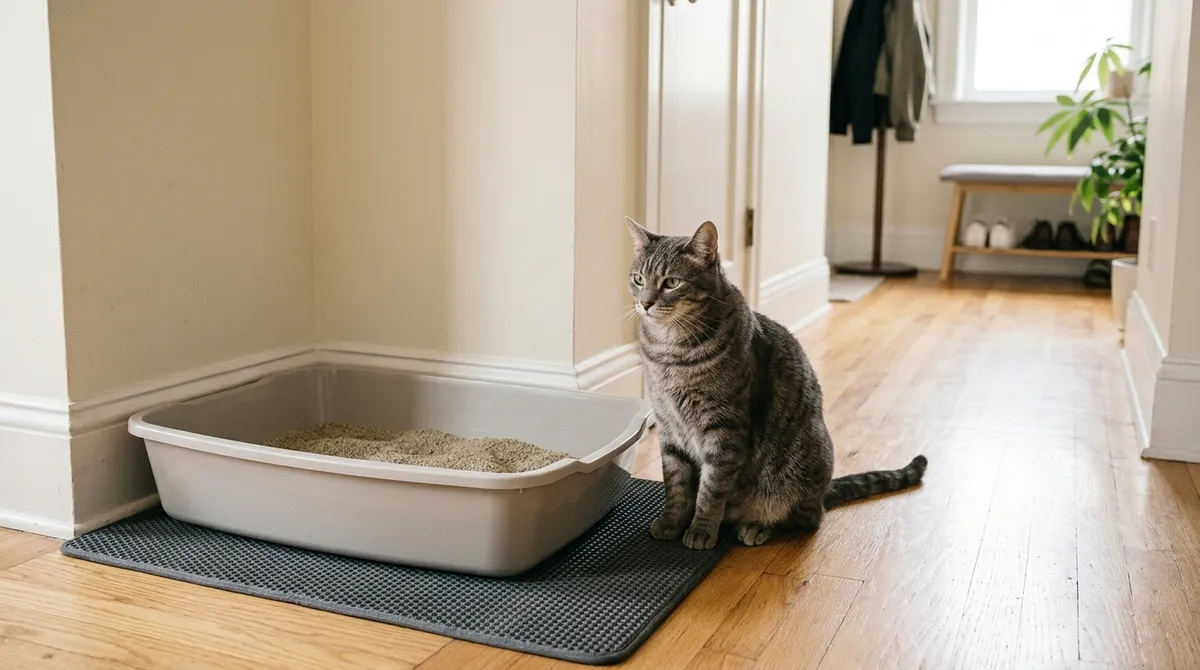
Cat Peeing Outside the Litter Box: Why It Happens and What to Do
Is your cat peeing outside the litter box, on your bed, couch or rug? Start here: he's telling you something is wrong. It could be pain, a litter box he can't stand, stress at home or a spot he has decided he prefers. Spite isn't on the list. The path is the vet first, proper cleaning of the soiled spot and an honest review of the litter box.
You lie down, pull back the comforter and feel that cold dampness at the foot of the bed. The smell rises, your anger rises with it, and sometimes the thought even shows up that you can't keep this cat anymore. Take a breath. This has a cause, it almost always has a fix, and we'll take it step by step.
How to stop my cat peeing on my bed: what to do today
Before any theory:
- Check whether it's an emergency. Is he going in and out of the litter box with no pee coming out? Read the next section right now.
- Book the vet visit, even if he looks great. Cats hide pain, and peeing in the wrong place is one of the few ways he has of showing that his bladder is bothering him.
- Clean every soiled spot with an enzymatic cleaner. If the smell stays, he'll come back.
- Protect what he picked (bedroom door closed, waterproof cover on the couch) and put an extra litter box, clean and uncovered, nearby.
- Write down where the pee showed up, whether it was a puddle or a spray on the wall, and what changed at home. That little notebook is worth gold at the vet visit.
You're not alone: at least 1 in 10 cats develops problems going to the bathroom in the right place, according to the ASPCA.
When peeing outside the litter box is an emergency
The male cat goes into the litter box, squats, strains, comes out. Five minutes later he's back, straining again, and nothing comes out, or just a few drops. Sometimes he cries while trying, or gives up and squats on the rug. There may also be nonstop licking of the genital area, restlessness, loss of appetite, vomiting and a cat slumped in a corner with no desire to move.
This can be a blocked urethra: the urine can't get out, the bladder fills up and toxins build up in the blood. The blockage can kill within a few days, in some cases in under 48 hours. So there's no math to do: it's an emergency for today, not tomorrow. If it's the middle of the night, go to a 24-hour emergency clinic.
Males are at higher risk, including neutered ones, because their urethra is longer and narrower.
Many people see a cat straining in the litter box and think constipation; if you can't tell whether it's a cat that can't pee or a cat that poops outside the litter box or is constipated, treat it as a blocked bladder and rush.
Blood in the urine along with pain and repeated trips to the litter box can't wait until next week either: bladder inflammation can get serious.
Is he doing it out of revenge?
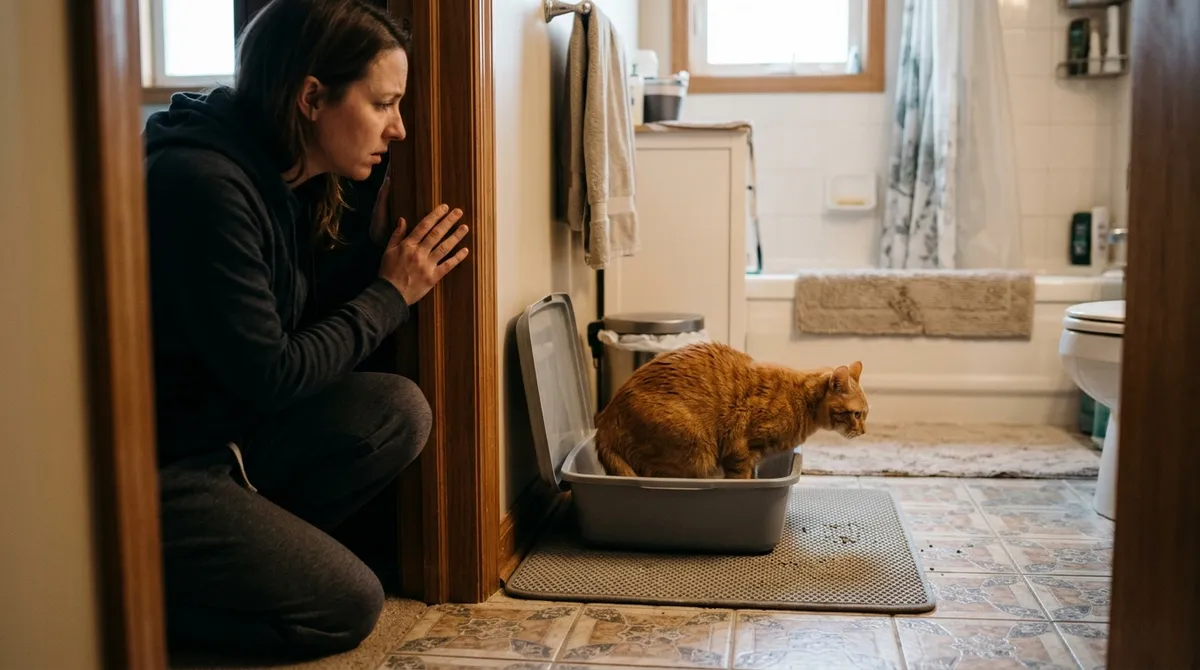
No. A cat doesn't pee on your pillow because you went away for the weekend or scolded him yesterday. What's going on is simpler: some need of his, physical, social or medical, isn't being met. It hurts to pee. The litter box is dirty or too small. Another cat is blocking the way. The house has been turned upside down. Feline veterinary associations have even stopped using terms that suggest bad behavior and now talk only about “house soiling,” precisely to take away from the cat a blame he doesn't deserve.
This matters, because the revenge idea is what makes so many people give up: many cats that soil the house end up returned or left at a shelter, and many never leave it. If you've thought about that in the middle of the night over a wet sheet, don't feel like a monster, because the smell of pee in a mattress would take anyone down. Just give the animal the chance to show you what's wrong.
Why my cat pees on the bed, the couch or my clothes
The answer almost always falls into one of these four groups, and often into two at the same time.
Health
The most common cause in a cat with a peeing problem is idiopathic cystitis, an inflammation of the bladder with no defined cause, in which stress plays a big part. It hurts, and a cat that feels pain in the litter box looks for somewhere else.
Bladder stones and crystals, infection, kidney or liver disease, diabetes and hyperthyroidism (several of which increase thirst and the amount of urine), age-related confusion and joint pain also come into it. A senior cat with arthritis often can't get over a high edge and pees next to the litter box. The cats at higher risk of bladder problems are middle-aged, overweight, inactive, drink little water, live indoors only and share space with other cats.
The litter box and the litter
A dirty, small, covered or plastic-lined litter box. Scented or too-deep litter. A brand change with no warning. A litter box next to the washing machine that kicks into the spin cycle. Too few boxes for too many cats. For some cats, just one of these details is enough.
Stress and living together
Moving, renovations, a baby, a new cat, a routine turned upside down. And the silent fight in which one cat just sits in the hallway staring and the other can't get past.
Preference for a place or a fabric
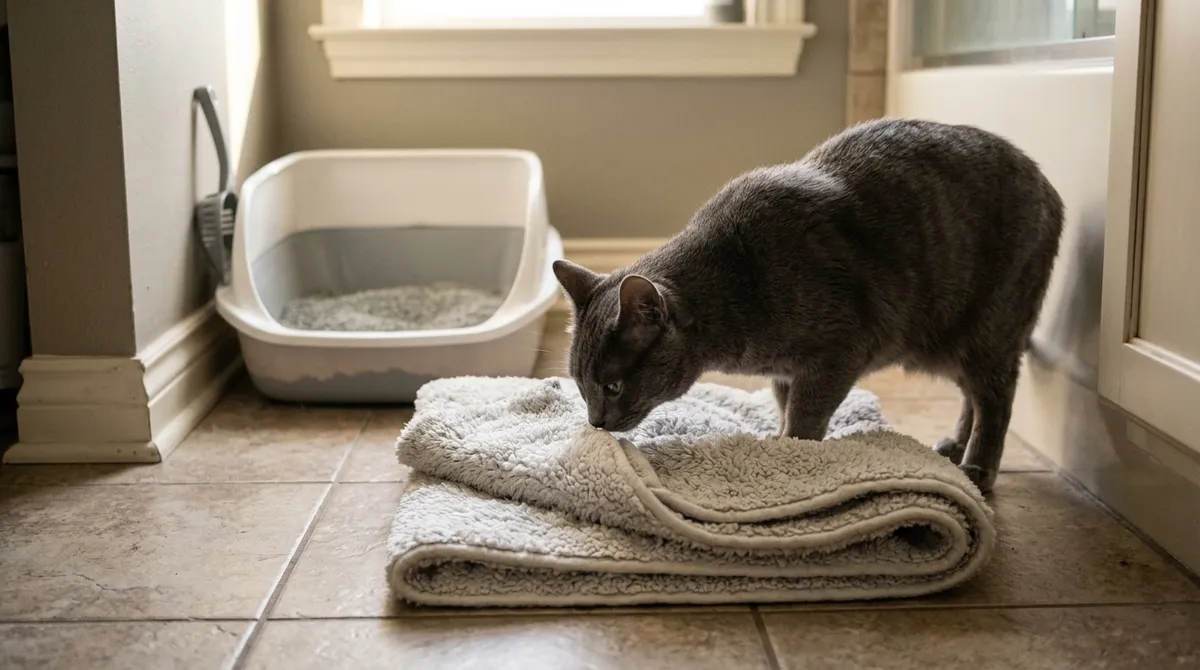
Look at the pattern. If it's always the same corner behind the door, the issue is the place. If it's the bathroom rug, a floor cloth, a blanket and clothes, in different spots around the house, the issue is the surface.
For the cat that “only goes on fabric”: take rugs, cloths and clothes off the floor for a few weeks, cover the bed or close the bedroom, offer a fine, soft litter, as close to fabric as a litter box can get, and put the box near the spot he chose. Once he's using the box with no slip-ups, the rugs come back, one at a time.
My cat won't use the litter box anymore: he always did and stopped suddenly
A sudden change in a cat that was always reliable points to the body first. Then think about what changed in recent weeks: a new home, another animal, a baby, the usual litter that ran out at the store.
And there's a trap. The cat had an infection, was treated, got better and still keeps going outside the box. While it hurt, he linked the box with pain and found another spot; the illness passed and the habit stayed. Now he has to relearn that the box is safe, and the adjustments in the next sections are for that.
“He was neutered five days ago and now he only pees on the couch”
Call the vet who did the surgery and say exactly that. It could be discomfort when he pees, and a cat that feels discomfort in the box looks for somewhere else. In the meantime, leave a very clean, low-sided box near where he's recovering, and protect the couch.
“It started after I got another female cat. And I have 4 litter boxes”
The point is where they are. If all four sit side by side in the laundry room, then for the cat being watched by the newcomer they count as one: all the other cat has to do is sit in the laundry room doorway. Spread the boxes around different spots, where nobody can watch all of them, and give each cat bowls and high places so the two can ignore each other in peace. With a new baby, make sure the cat has a box in a corner where nobody walks.
Is it peeing or spraying? Does neutering fix it?
They're different problems. Look at the scene.
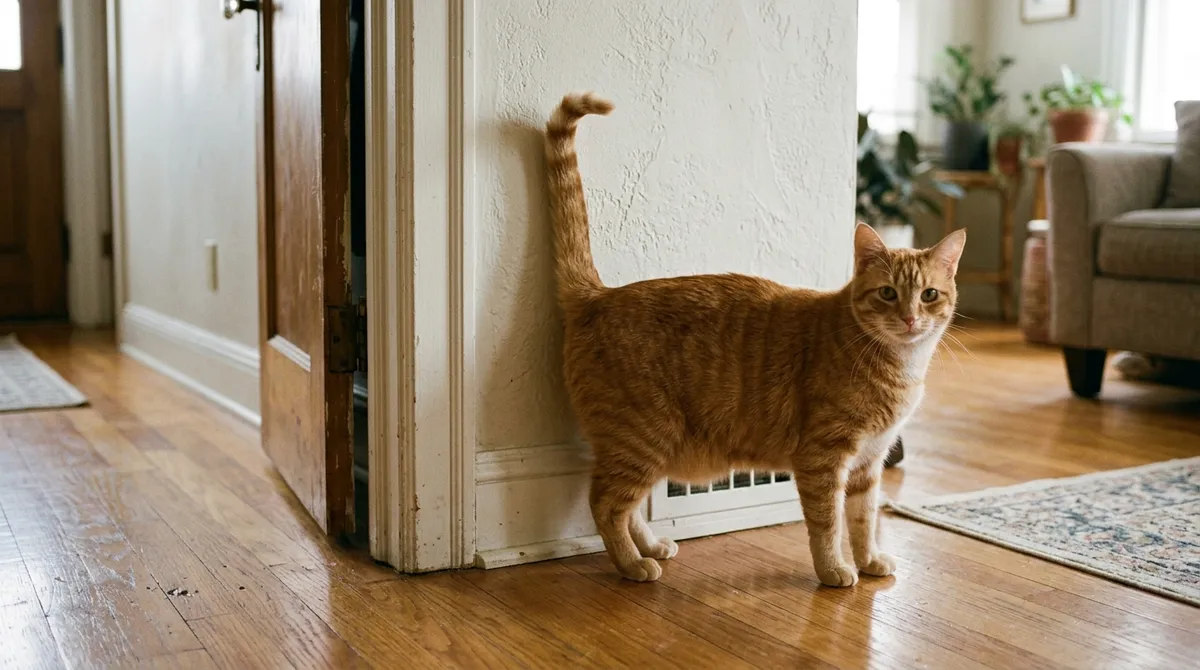
In spraying, the cat stands with his back to the wall, the curtain or the side of the couch, lifts his tail (sometimes the tip quivers) and squirts a small stream onto a vertical surface. The detail that helps most: a cat that sprays still uses the litter box for his normal pee. That's a message for other cats.
In peeing outside the litter box, he squats and leaves a good-sized puddle on a flat surface, and he has often started avoiding the box.
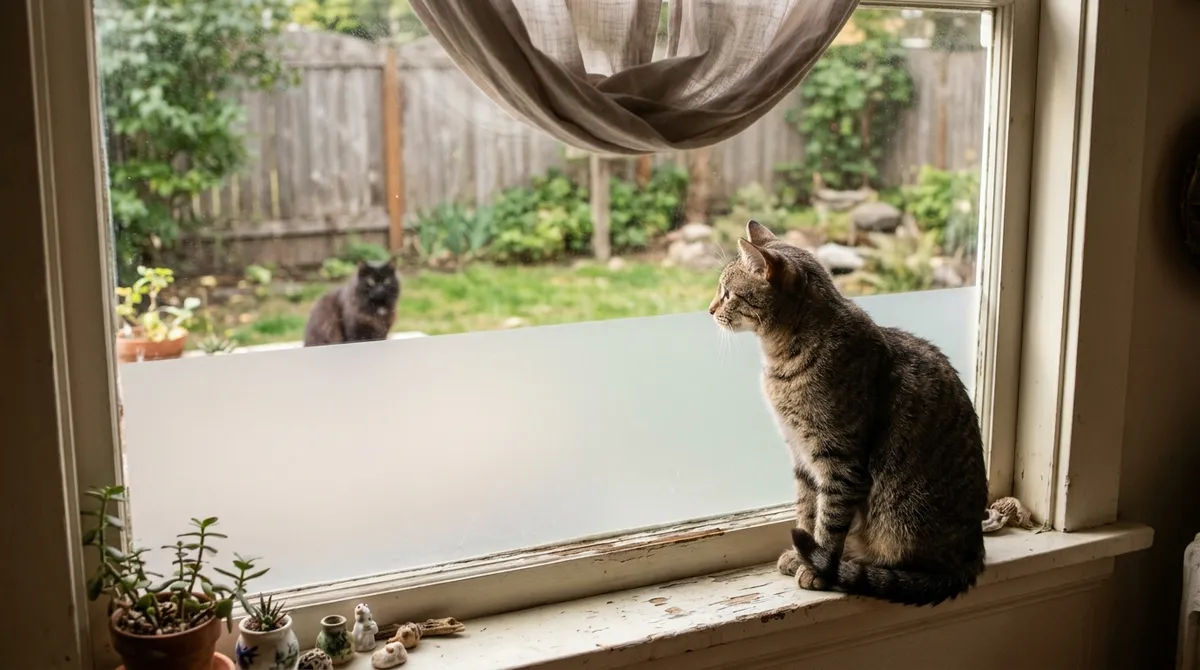
Neutering is the first step against spraying and usually reduces it, but not overnight. Females and neutered males also spray, especially when they feel threatened by another cat, including the neighbor's cat showing up at the window. It also helps to clean the sprayed spots well and to reduce fights inside the house.
How many litter boxes to have and where to put them
The math is one box per cat, plus one. One cat, two boxes. Two cats, three. Three cats, at least four. In a home with more than one floor, one on each floor.
And the location matters as much as the number:
- In at least two different spots in the house, never in a row in the same room.
- Away from food and water. Nobody likes to eat dinner in the bathroom.
- In a quiet corner, out of the traffic and away from noisy appliances.
- With an escape route. He wants to see who's coming and have a way out.
Which litter box and which litter your cat prefers
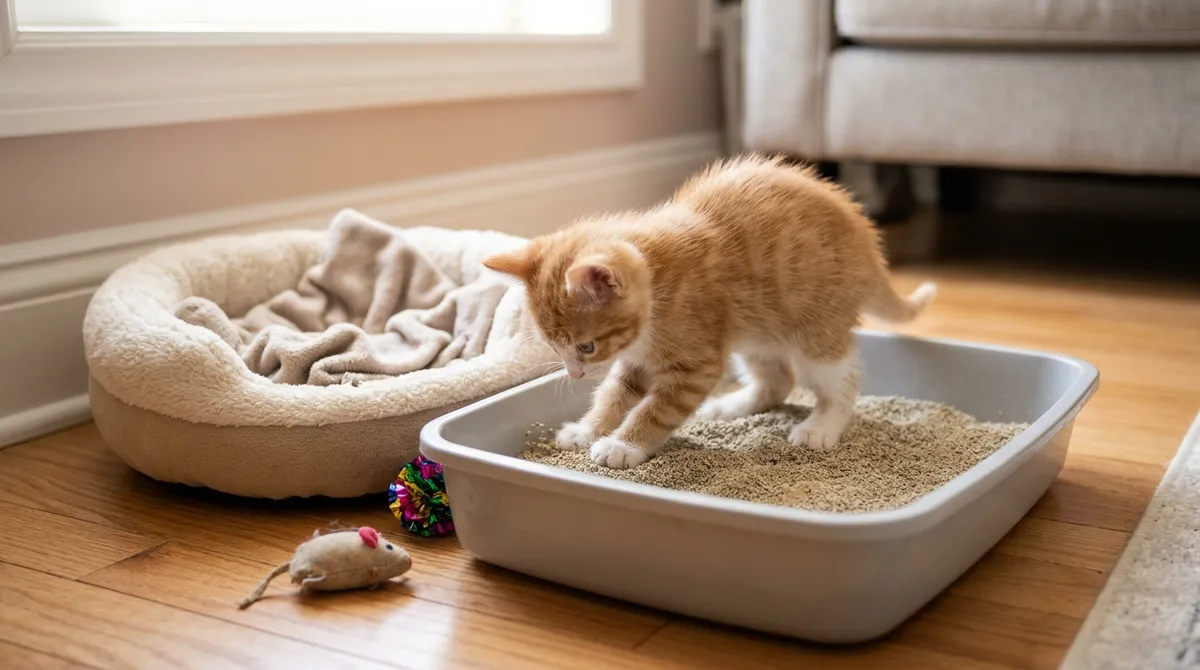
The box: large, uncovered, with no lid and no plastic liner. A covered box pleases the human nose more than the cat, who is stuck inside with the smell and can't see who's coming. For a senior cat, one with arthritis, or a kitten, a low edge or a cut-out entrance; a top entrance is out of the question.
The self-cleaning litter box is a matter of temperament: some cats don't care, others get scared of the motor noise and never go near it again. If he started avoiding the box after it arrived, you already have your answer.
The litter: clumping, unscented, fine to medium grain, 1 to 2 inches (2.5 to 5 cm) deep. Filling the box to the brim only makes his paws sink in. Scent is for you; for the cat, with a much stronger sense of smell, it can be unbearable.
Don't know which litter he prefers? Put two or three identical boxes side by side, each with a different litter, and look at the clumps to see which one he uses most. He votes with his paws. And change brands only gradually, mixing the new one into the old.
Kitten won't use the litter box
Put a low-sided box near where he sleeps and plays, and take the kitten to it right after he wakes up, eats and plays. When he gets it right, praise him in a calm voice. When he misses, clean up without drama and move on.
How often to clean the litter box
Scoop the clumps at least once a day. Once a week is the safest schedule for throwing out all the litter, washing the box with warm water and unscented mild soap (or baking soda) and refilling it; with clumping litter and good daily scooping, you can stretch the full change out to 2 to 4 weeks. While your cat is refusing the box, stick with the weekly one.
How to get the pee smell out and keep him from going back to the same spot
If the spot still smells like pee to the cat's nose, he understands that it's a bathroom. That's why cleaning is part of the treatment.
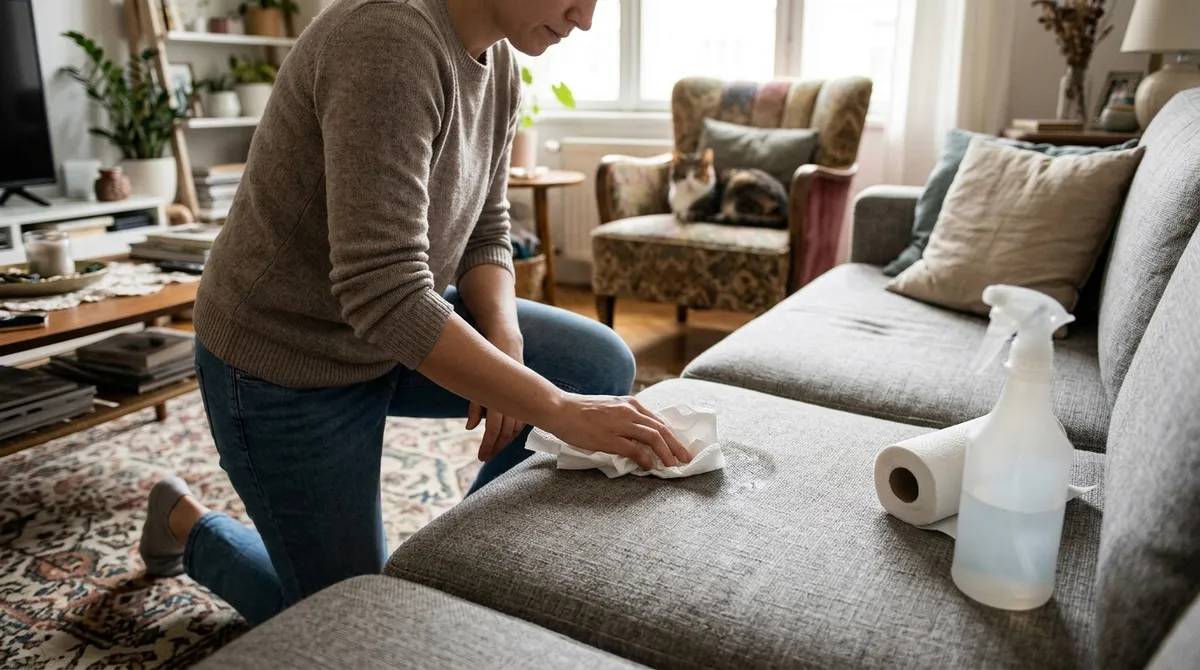
- Take up the excess by pressing with paper towels, without rubbing.
- Soak it with the enzymatic cleaner. It breaks down what causes the smell instead of just masking it. On the mattress and the couch, let it sink in deep and work for the time on the label.
- Never use a product with ammonia. Pee contains ammonia, and cleaning with it leaves an invitation in the same spot.
- Change what the spot means. The best move is to put a litter box right there; once he's using it, slide it a few inches a day to where you want it. If that's not possible (nobody wants a litter box in the middle of the bed), put his food bowl, a little bed or toys there: cats avoid peeing where they eat and sleep.
- Make the spot less inviting. Double-sided tape, aluminum foil, a motion-sensor light or a plastic carpet runner turned upside down.
Watch for the side effect: closing off one spot sometimes sends the cat back to the box and sometimes just pushes the problem to the next corner. Pee in a new place? Put a box there too.
Which of my cats is peeing outside the litter box
With two or more cats, finding out which one it is changes everything, because one may be sick and the other perfectly fine. The most reliable way is a camera: an old phone pointed at the usual spots. Sometimes the whole story shows up: the cat that goes to the box, runs into the other one at the door and gives up.
There's also an exam-room trick: fluorescein, a dye the vet gives to one of the cats that makes his urine glow under ultraviolet light for about a day. The third option is to separate the cats for a few days and see where the accidents continue.
Scolding, rubbing his nose in the pee or locking the cat in with the box?
Scolding: no. The cat doesn't connect the scolding now with the pee from an hour ago. He connects the scolding with you.
Rubbing his nose in the pee: never. There's always someone in the comments swearing they did it “and he never did it again.” What that cat learned was that peeing near people brings trouble, and most likely he started doing it in hiding, behind the couch, where it takes you weeks to find. He didn't learn to like the box. If you've already done it, don't carry the guilt: a lot of people do it out of desperation. From now on, pee outside the box gets cleaned up with no audience and no scolding.
Dragging the cat to the box and holding him in it: no to this one too. He starts to link the box with fright and the rejection gets worse.
Confining him in a room with the box: only as management. A quiet room with a box, water, food, a bed and a toy helps during the hours when nobody can watch while you sort out the rest. Never as punishment, and never for weeks without changing the box, the cleaning and the routine.
Do medication or pheromones fix it?
They help when the root is stress or anxiety, and only with a prescription and follow-up. No medication fixes a dirty box, scented litter or a box in the wrong place, and a calming drug on your own can hide pain that needed to be seen.
The synthetic pheromone, in a plug-in diffuser or spray, had some effect against stress and works as support for the adjustments, never in place of them.
I fixed the litter box and it didn't work: now what?
It happens. A study of cats that peed around the house found greater weight on three things outside the box: living with several cats, having access to the outdoors and having a cat door.
In practice, fixing the box is still the starting point, because it's quick, cheap and has no contraindications. If it wasn't enough, look at the surroundings:
- Several cats: more boxes spread around, more bowls, more hiding places and high perches, less competition over the hallway.
- A cat that goes outside: he runs into other cats outdoors and comes back tense, or the neighborhood cat comes in through the cat door and leaves a scent. Close the cat door for a while or swap it for one that only opens for your cat.
- A cat at the window: if an outside cat shows up in the yard and yours starts spraying, cover the lower part of the window for a few weeks.
How long until he goes back to using the litter box
Count on a few weeks of adjustments. The first good sign is the gap between one accident and the next getting longer, week by week. If, after a few weeks of doing everything right, nothing has changed, the case calls for a fuller evaluation, both health and behavior.
If the diagnosis was idiopathic cystitis, the flare-up usually passes in days to a few weeks, but it likes to come back: about half of cats have another episode within a year. That's why a calm home, plenty of fresh water and an impeccable box still matter after everything has improved. A relapse means something changed at home again and it's time to go back to basics.
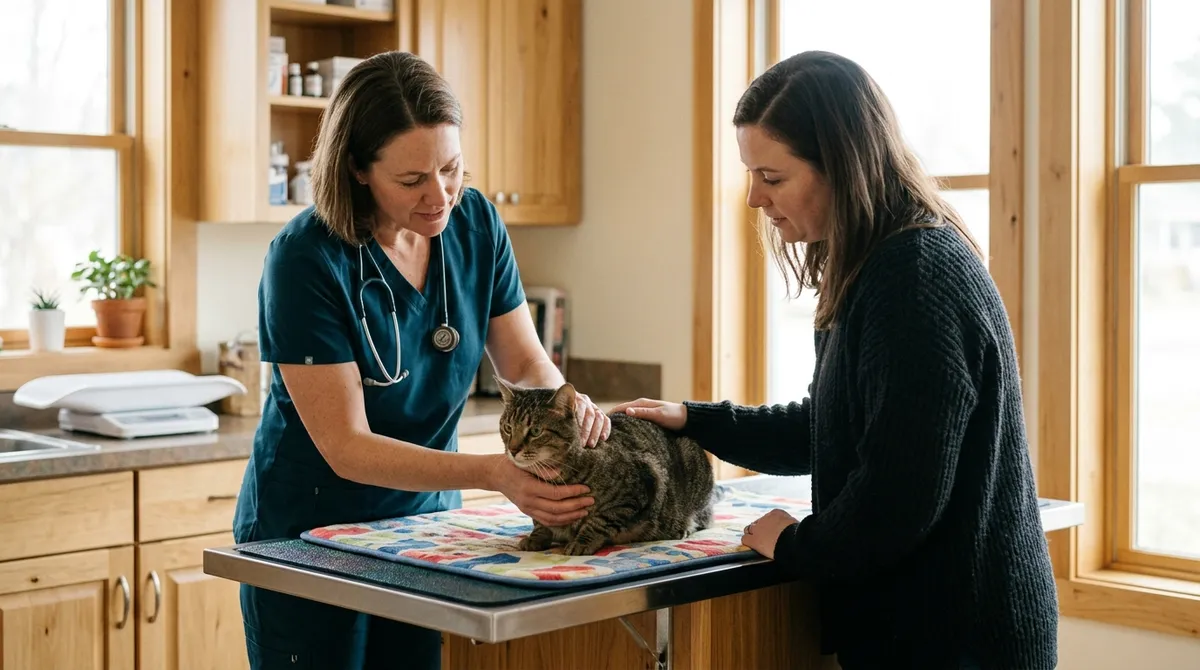
When to see the vet
- Right now, without waiting: he goes in and out of the box with no pee coming out, strains, cries, licks the area a lot, vomits or is lethargic. Even more so if he's male.
- Today: blood in the urine with signs of pain, or trips to the box all the time.
- In the next few days: he suddenly quit the box, even though he looks fine; he's drinking water and peeing much more than before; he's a senior and started missing the box or avoiding it; the problem started right after surgery, including neutering.
- After a few weeks: you adjusted the box, litter, cleaning and the household and it didn't get better.
Take the notebook: since when it's been happening, where it shows up, whether it's a puddle or a spray on the wall, how many boxes you have and what changed at home.
Summary to stick on the fridge
- Straining in the box and little or no pee: emergency, today.
- Quit the box: vet first, adjustments at home at the same time.
- It's not revenge. Some need of his isn't being met.
- Boxes: one per cat plus one, in different places, away from food.
- Large, uncovered box, no liner. Low edge for a kitten and a senior cat.
- Clumping, unscented, fine litter, 1 to 2 inches (2.5 to 5 cm). When in doubt, test side by side.
- Scoop daily, full change every week.
- Enzymatic cleaner, never ammonia.
- At the favorite spot: a box, food or a little bed.
- Spraying is a jet backed against the wall; neutering is the first step.
- Never scolding, a nose in the pee or a cat locked up as punishment.
- A few weeks of patience.
A cat that pees outside the box is telling you, in the only way he knows, that something hurts, scares or bothers him. When you find out what, the comforter goes back to being just a comforter.
Sources
This text was written from the sources we consulted in October 2026:
- New AAFP/ISFM Guidelines for Diagnosing and Solving House-Soiling Behavior in Cats Now Available — American Association of Feline Practitioners
- Guidelines address house soiling in cats — AVMA (JAVMA News)
- Litter Box Problems — ASPCA
- Cat Behavior Problems – House Soiling — VCA Animal Hospitals
- Feline Lower Urinary Tract Disease — Cornell Feline Health Center
- Urethral obstruction in cats — International Cat Care
- Noninfectious Diseases of the Urinary System of Cats — Merck Veterinary Manual
- Urethral Obstruction in Small Animals — Merck Veterinary Manual
- Lower Urinary Tract Disease in Cats — Merck Veterinary Manual
- Common Risk Factors for Urinary House Soiling (Periuria) in Cats and Its Differentiation: The Sensitivity and Specificity of Common Diagnostic Signs — PubMed Central
- House soiling in cats — Royal Canin Academy
- Inappropriate Elimination (House Soiling) in Cats — Veterinary Partner (VIN)